



For the past year, I've focused on whether AI mentions your brand. Meta's Muse agent raises a different question: what happens when the AI doesn't just mention you, but makes the purchase?
Meta is heavily promoting Muse to its vast audience across Facebook, WhatsApp, and more, and that audience is responding. It achieved over 5 million downloads in its first 22 days, surpassing the performance of ChatGPT, Grok, and Claude at their introductions.
Meta is well-positioned to become what Google was to traditional search and ChatGPT to AI search: the default AI agent for consumers. However, some key uncertainties remain.
This article will answer:
- What you need to know about Muse
- Whether or not Muse should be tracked like a search engine
- Whether Muse and other AI agents matter for ecommerce
- The implications for enterprise ecommerce
- The next action steps to take starting today
Where Does Muse Stand in the AI Agents World?
Meta launched Muse on September 8 as a personal AI agent for consumers in the US. It goes well beyond answering questions. It can research products, compare options, and complete checkout on the user's behalf, asking for approval before it spends money.
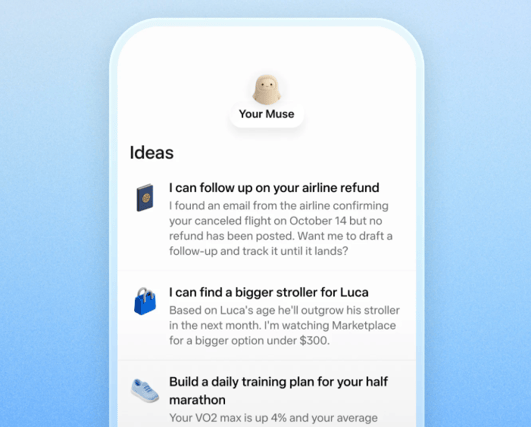 Photo source: https://ai.meta.com/muse/
Meta had checkout partners from day one, including Stripe Link, PayPal, and Shop Pay. Shopify announced agentic checkout with Shop Pay across its stores. Shopify's CFO has said that shoppers who start their search in an AI model see roughly an 80% lift in conversion.
Then Amazon blocked it. Amazon said Muse accessed its store without telling Amazon, didn't identify itself as an agent when it browsed, and appeared to capture and store customer login credentials. Many experts in the field suspect that the real reason for the block is Amazon’s internal ads (sponsored listings). If someone uses an AI agent to purchase on Amazon, they never get exposed to the paid results.
So within the first month, two of the biggest names in commerce gave us both possible responses. One opened the door. The other locked it.
Should Muse Be Tracked Like a Search Engine?
Though AI powered and using LLM technology to generate its chats, Muse has significant differences with other familiar AI chat engines such as ChatGPT, Gemini or Claude.
For one thing, there is no public facing version of Muse. It was built as a personal assistant and operates entirely within the closed and highly personalized world of a user's Muse app.
Our research shows that its behavior is extremely dependent on the context of the individual user, thus making it difficult to extract meaningful aggregate data.
We continue to monitor Muse and consider any possible tracking data, but for now we think the importance of muse is not in the search world but in the agentic ecommerce one.
Meta Built It, But Will They Come?
Winning consumers and changing shopping habits has been a tough challenge for many before. Think Alexa (only 2% of users ever used it to shop) and OpenAI's ACP Instant Shopping (withdrawn in less than a year).
Nevertheless, with that huge download base and Muse’s claim that over 3 million users send at least one prompt daily, it’s inevitable that Muse will have an impact on the ecommerce industry. In addition, the experience on Muse is more interactive, with clear check-ins with the user before taking any actions, which is likely to increase confidence.
Ultimately, whether or not Muse succeeds or becomes “the next big thing” in agentic AI is less important than being prepared overall for agentic search, which is only likely to keep growing.
Also keep in mind that Google remains and is likely to keep on being the major player in consumer-facing AI.
What Muse Means for Enterprise Ecommerce
If you’re an ecommerce organic search professional or an executive with that in your portfolio, here are the first things you should consider:
- Can you afford to do nothing? This is your primary consideration. What happens if you block AI agents or just decide to do nothing, but your competitors are getting sales from them? As overall AI use increases, the potential risk of not being visible there rises as well.
- Agentic commerce is about being chosen. Probability of mention was already the right way to measure AI search. Now there's a step after the mention: the selection. Good, fundamental SEO is key to that discovery process (see more below).
- Missing or wrong product data loses the sale. If the agent can't find details like the inseam, the delivery date, or the current price, it moves on, and nobody sees the comparison it made (seoClarity data shows AI already gets facts about your brand wrong around 40% of the time.)
What to Do to Optimize for Muse NOW
- Make your product data readable by machines. That means complete Product, Offer, and Review structured data; price and stock in the server-rendered HTML, not only in JavaScript; and shipping, returns, and warranty spelled out in plain text. AI bots can't cite what they can't see, and agents can't buy what they can't read. (TIP: seoClarity’s Product Feed Optimizer makes this easy to do at scale)
- Check for technical issues that can cause AI agents to fail on your pages.
- Choose your agent checkout path. If you're on Shopify, agentic checkout through Shop Pay is already available. If you run your own platform, look at what Stripe and PayPal now offer, including PayPal's support for WebMCP.
- Keep your product feeds and pages in agreement. Every mismatch between them gives an agent a reason to pass you by.
- Keep up with the latest on dedicated product feeds for all the agentic AI shopping experiences. If you’re an seoClarity client, no worries here; we’ll keep you informed!
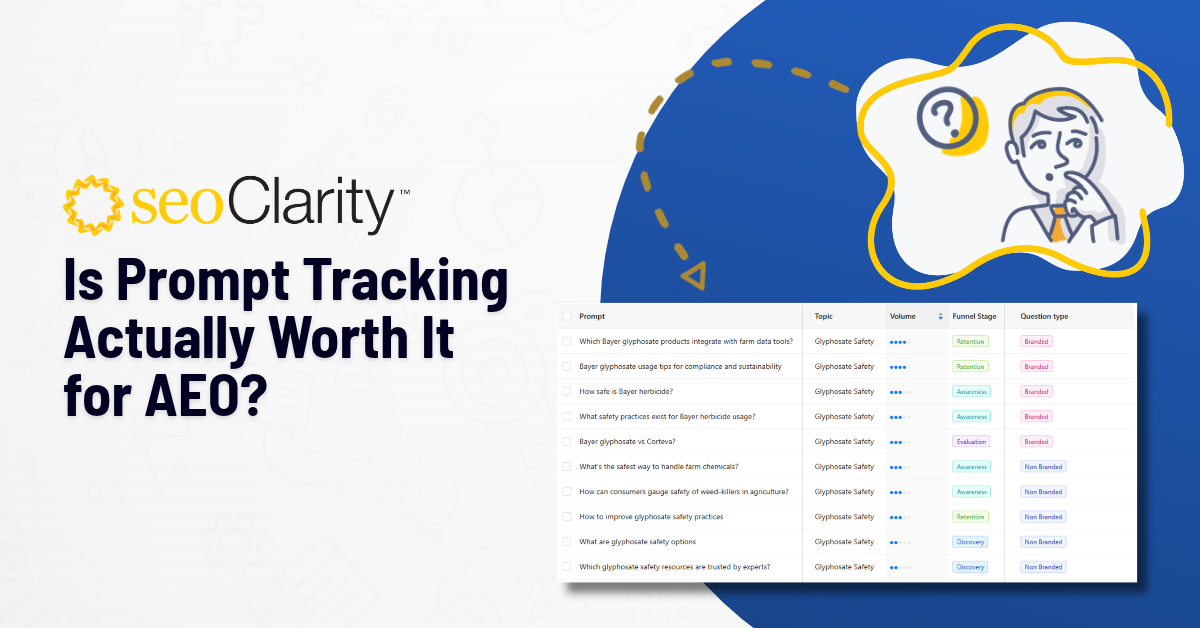
- Track representative shopping prompts. Measure how often AI mentions you, recommends you, and picks you over the alternatives.
On An Ongoing Basis
- Report agent-driven orders as their own channel. Compare their conversion, order value, and return rates with your human shoppers.
- Update your fraud rules and terms of service to cover purchases an agent makes.
- Watch what AI says about your returns, quality, and pricing, and fix inaccuracies at the source.
The Fundamentals Still Apply
None of this replaces SEO. It's still table stakes. The agent has to find you before it can choose you. It finds you through the same crawlable, relevant, authoritative content that search has always rewarded.
What changes is who your customer is at the moment of decision. For a growing share of shoppers, that will be an agent acting on their behalf with a list, a budget, and no time for endcaps.
So start with the audit. Find out how agents see your site today and decide how you want them treated. Then fix the product data that would cost you the sale, and keep measuring and testing as this channel grows up.

Comments
Currently, there are no comments. Be the first to post one!