



Link building is no longer just about improving rankings.
It validates entities, reinforces topical authority, and influences what traditional and AI search engines choose to rank, cite, or mention.
Earning high-quality backlinks is harder and more resource-intensive than ever because sites are pickier and search engines are better at spotting low-quality ones.
Luckily, many of the best opportunities are already in your own data. This guide outlines eight backlink strategies that focus on efficiency and impact.
The Importance of Link Building
Despite ongoing debate, link building remains a foundational signal for search visibility, both for traditional rankings and for how sites are referenced and mentioned across AI search engines.
Links act as a proxy for authority, trust, and relevance, helping search engines determine which content deserves visibility when multiple pages compete for the same intent.
The Challenge of Link Building
While links remain valuable, acquiring them has become increasingly difficult. Earning high-quality backlinks is time-consuming, resource-intensive, and often requires outreach to sites with little prior relationship to your brand.
That’s why many effective link-building strategies start with existing data. Re-engaging sites that already link to you is typically more efficient than sourcing entirely new opportunities. From there, more effort-intensive tactics can expand your link profile further—often delivering meaningful authority gains when executed well.
The strategies below focus on both approaches, starting with opportunities hidden in your current link profile and expanding outward to earn new, high-quality backlinks.
8 Backlink Strategies to Boost Your Organic Performance
A quick note before we begin: I've organized these backlink strategies into two groups. The first three strategies below will help you find new links in your existing link profile. Strategies four to eight allow you to expand your link profile with new mentions and backlinks. I've included links to each strategy's section below for easy navigation.
| Find New Links in Your Existing Link Profile | Expand Your Link Profile With New Mentions & Backlinks |
Recommended Reading: Link Profile Analysis: How to Maintain a Clean Backlink Profile
#1. Focus on Contextual Relevance Over Technical Tags
Google’s Link Spam Update of 2025 now uses AI to evaluate the context of a link regardless of the tag.
High-authority NoFollow links from trusted sources such as major publications, and industry leaders contribute meaningful discovery and entity validation signals, particularly for AI search engines which assess brand mentions and topical alignment.
Rather than focusing on converting NoFollow links by default, prioritize links that appear in relevant, editorially sound contexts.
To identify the strongest opportunities, analyze your existing backlinks by topic relevance and authority.
SeoClarity’s Link Clarity allows you to filter links based on topical alignment, helping you focus outreach efforts on links that reinforce expertise and trust.
#2. Optimize Image Links With Descriptive Alt Attributes
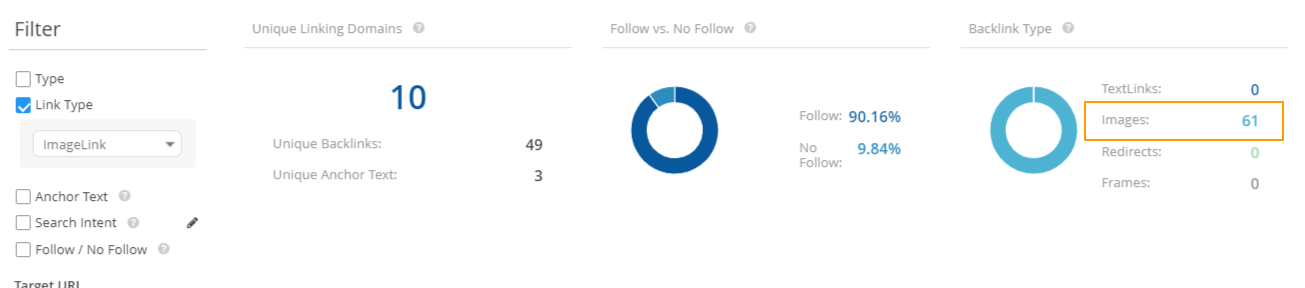
A link from an image is fine, but an image without descriptive alt text provides limited context for search engines.
Search engines and crawlers cannot interpret images without alt text, even though images play an important role in how users experience a page.
Alt tags solve for this by providing text which search engines read to understand their value.
These are easy to find using the filters in seoClarity’s Backlinks report:
#3. Monitor for Lost Links
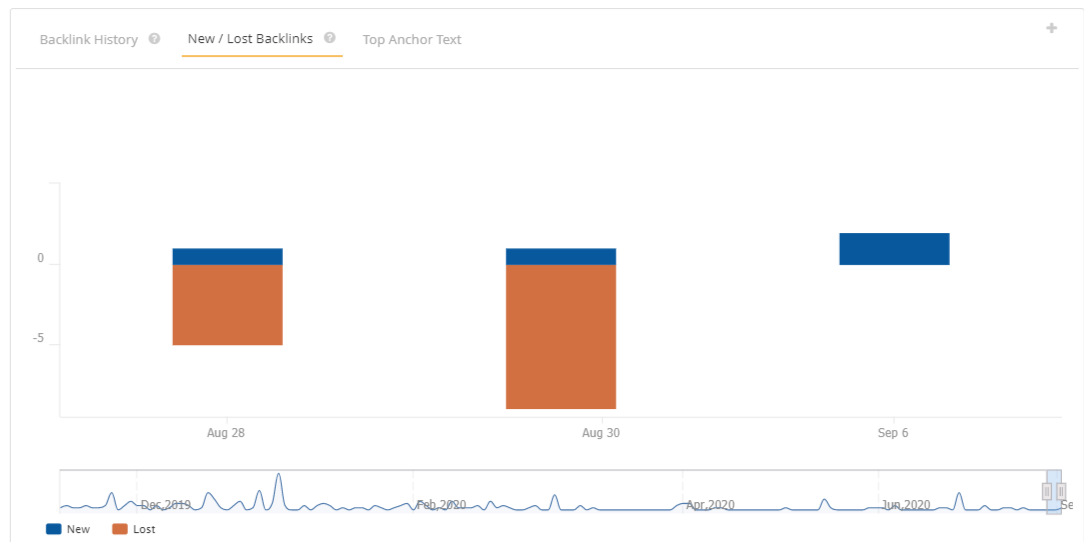
There’s a good chance that sites which previously linked to your brand or website have since removed those links for a variety of reasons.
This could be a conscious change or possibly the site dropped that page. Prioritize the lost links from highly authoritative sites and reach out to them and reclaim those links. It might negatively impact your site.
It's also important to actively monitor the anchor text and to make sure there wasn't a change from a current dofollow link to a nofollow link.
Recommended Reading: How to Run a Backlink Analysis of Your & Your Competitors’ Link Profiles
#4. Reclaim Unlinked Brand Mentions
Enterprise brands are frequently referenced across the web through press coverage, product mentions, research citations, industry commentary, and mentions in AI answers. However, not all of those mentions include a backlink.
Reclaiming unlinked brand mentions strengthens traditional SEO while improving visibility in AI answers.
Start by monitoring brand, product, and key people mentions across the web to identify where attribution exists without a link. Where appropriate, outreach can help convert those mentions into backlinks
To fully capture this opportunity, monitoring should extend beyond websites and social platforms to include mentions in AI answers.
ArcAI Pulse helps track brand and entity mentions anywhere online so you can uncover relevant opportunities as they surface.
TIP: This approach works equally well for mentions of executives, spokespeople, and subject-matter experts, which often reinforce entity authority even without direct links.
#5. Publish Linkable Assets That Earn Citations Naturally
Anyone actively building links will agree that it's much simpler to earn a link than to build it.
But how do you earn links to your content? You design it to be linkable.
Linkable assets are pages that offer information other people will find worthy of referencing in their content. The most common examples include:
- Proprietary research other content creators could cite in their work, or
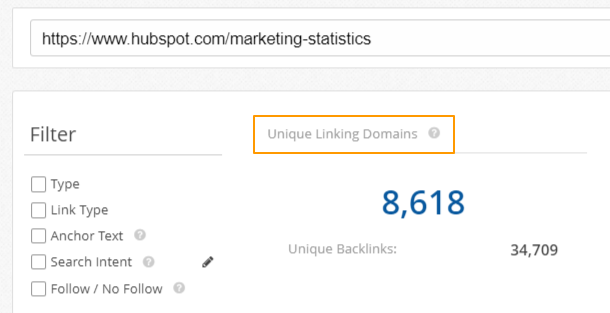
- Collections of statistics, such as HubSpot’s curated data resources, which continue to attract thousands of backlinks over time.
#6. Build Free Tools That Attract Organic Backlinks
Providing a free tool can generate buzz about the company and help it acquire organic, white-hat links in the process.
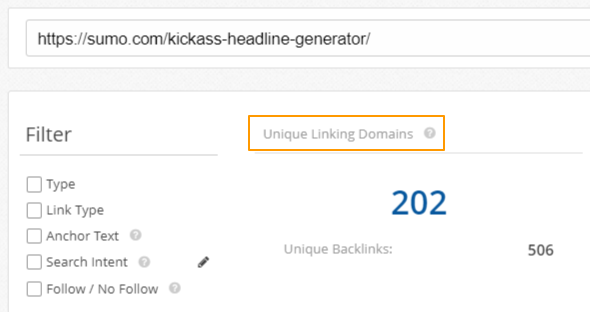
For example, BDOW! Headline Generator earned the company links from 202 unique domains in a single year.
For it to bear fruit, this backlink strategy requires additional PR push to spread the word on the free tool. You must ensure that people who could link to it will know the tool even exists, after all.
This can be done in many ways — through personal outreach to bloggers, submitting the tool to ProductHunt, mentioning it online on Quora and various online forums, and more.
Speaking of free tools, we offer a free Schema Builder tool, a Chrome plugin that allows users to add structured data easily, without the need for a web developer.
Its point-and-click functionality generates perfect schema markup for any webpage in mere minutes.
It’s a practical option for teams looking to experiment with structured data without involving engineering resources.

#7. Strategic Content Partnerships
Guest publishing only works when it’s done strategically rather than a link placement tactic.
Publishing on low-quality sites that offer no long-term value is often dismissed by search engines.
Instead, contribute content to authoritative third-party platforms that already rank for your target topics. It reinforces expertise and earns contextual backlinks and entity mentions.
This approach has become even more important following Google’s July 2025 shift toward more heavily indexing public content from platforms like Facebook and Instagram.
High-quality, public posts on authoritative profiles and pages can now contribute to discovery, visibility, and brand validation beyond traditional websites.
To prioritize the best opportunities, use link gap analysis to identify which authoritative sites already link to your competitors but not to you.
#8. Earning Backlinks Through Product Reviews
This strategy is ideal if you want to build links to product or other money pages.
These assets typically aren’t very link-worthy, with fewer publications willing to reference them organically.
The situation is different with product reviews, however. In such instances, reviewers will almost always link to a reviewed product, to allow their audience to learn more about it, and purchase it, if they wish to do so.
I admit that this might be a bit more costly strategy, requiring sending free samples of the product to selected bloggers or publications.
However, if you struggle to build links to money pages, then acquiring product reviews offers the biggest opportunity to overcome this.
#9. Optimize for Citations in AI Answers
Backlinks still matter in AI search, but their role has shifted. Instead of acting primarily as ranking levers, links increasingly function as entity validation and trust signals that help AI search engines decide which sources to reference when generating answers.
When a brand is consistently referenced by authoritative sources, whether through linked citations or high-quality unlinked mentions, it reinforces that entity’s credibility.
A single high-quality link from a trusted source can carry more weight for AI visibility than dozens of low-context links, especially when paired with clear content structure and consistent entity usage.
Pages that answer questions precisely, cover the topic fully, and are well-structured are more likely to be cited. Here is a guide that explains how to optimize content for AI search.
seoClarity’s AI Content Optimizer gives you clarity, insights, and tools to make your content the source AI search engines choose.
Closing Thoughts
It’s only natural to launch any link-building strategy by looking for new backlink opportunities outside of your site. However, internal data about existing links as well as the site’s performance helps to gain focus and clarity to identify the best potential links to create.
The best opportunity for sites is to evaluate existing data first for insights before scouting the web for new linking partners.
Making this approach part of your SEO and AEO strategy helps focus effort where it matters most and strengthens long-term authority signals.
<<Editor's Note: This post was originally published in May 2018 and has since been updated.>>

Comments
Currently, there are no comments. Be the first to post one!