



The following is a transcript from our webinar, "The Search Pivot: Prove Value Beyond Traffic in 2026." In this session, our experts discuss why the traditional SEO playbook is evolving. In addition, they provide actionable insight into how enterprise teams can justify their content investment, expand visibility, and stay competitive in a world dominated by AI search and zero-click results.
Table of Contents
- Why We Need to Pivot Search Strategies in 2026
- The Friction: Why Traffic Isn't Enough
- The Trajectory of AI Referral Traffic
- Pillar 1: Technical Readiness
- Pillar 2: Content Authority
- Pillar 3: Market Expansion
- Pillar 4: Strategic Execution
- Pillar 5: Modern Measurement
Why We Need to Pivot Search Strategies in 2026
Chris: I’m really excited for the chance to chat with you today. Before I get started, though, I want to be very clear: today isn’t about handing you a new strategy, or I’m not going to try to scare you into making any drastic changes just because of AI search.
This is really about how to prove the value of the strategy you already have. The reality is that search isn’t broken—it hasn't become broken—but our measurement for success hasn’t necessarily kept up, and that’s where we need to pivot.
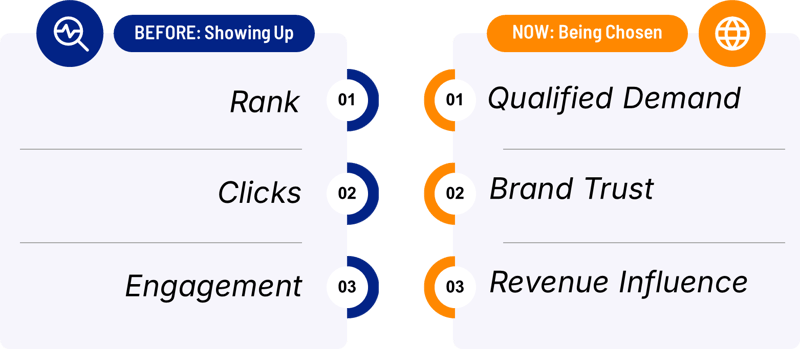
We used to rely on rankings and traffic, but those metrics only proved visibility, not influence. And in a world where buyers get answers without clicking, the game has changed. The only question now is: what matters? Did we actually get chosen?
That is why we’re shifting our focus to outcomes that connect directly to business qualified visibility and commercial influence. We are keeping the same fundamentals, but adding a much clearer proof of impact.
The Friction: Why Traffic Isn't Enough
Chris: We’re all feeling the same friction. And with all of the different companies that I have a chance every day to talk to, they’re all feeling the same thing. Traffic simply isn’t as dependable as it used to be.
Buyers are getting answers faster, often before a click ever happens, which makes defending content ROI incredibly difficult. We could publish more, yet we are still struggling to prove business impact because visibility is no longer just about rankings. It's scattered across AI answers, citations, summaries, and brand mentions.
What this does is it makes our reporting story messy. And quite frankly, a lot of the SEOs that I've been working with have a hard time providing the narrative up to the executive level. They could show movement, but it's harder to actually show influence. The bottom line is discovery has evolved; however, our measurement still has stayed stuck in "traffic mode."
The customer journey used to be a predictable path: click, land, explore, convert. But now, the first impression happens directly in search results and AI answers. That shift is critical because the first impression can actually win or lose a deal before the visit ever takes place. That is why we have to measure how we show up, how we are framed, and what the business impact is that drives the actual commercial revenue or leads.
Recommended Resource: Mobile and Desktop CTR Study
The Trajectory of AI Referral Traffic
Chris: Many of you have probably seen the same type of reports around the trajectory of AI referral traffic. We saw, especially early last year, this incredible spike in the amount of traffic coming to websites. It wasn't necessarily the volume of traffic that was so impressive, it was the trajectory and how quickly it rose.
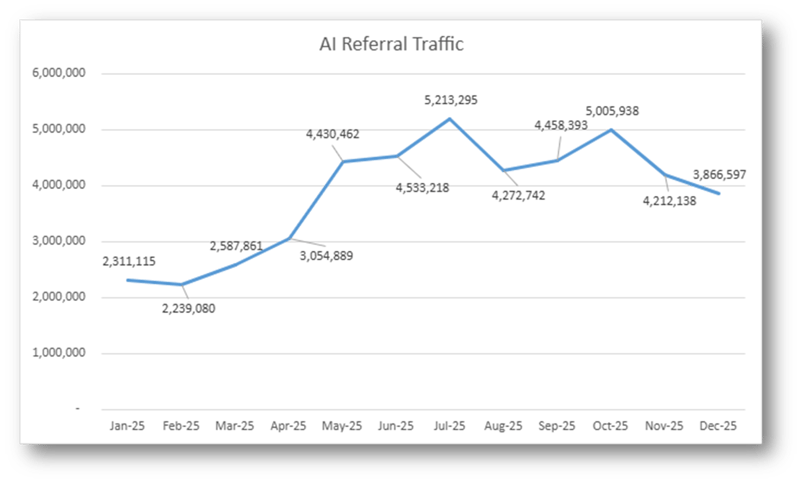
Note: Because Google is grouped into one“referral domain”, this doesn’t include the impact from Google AIOs, AI Mode,or Gemini.
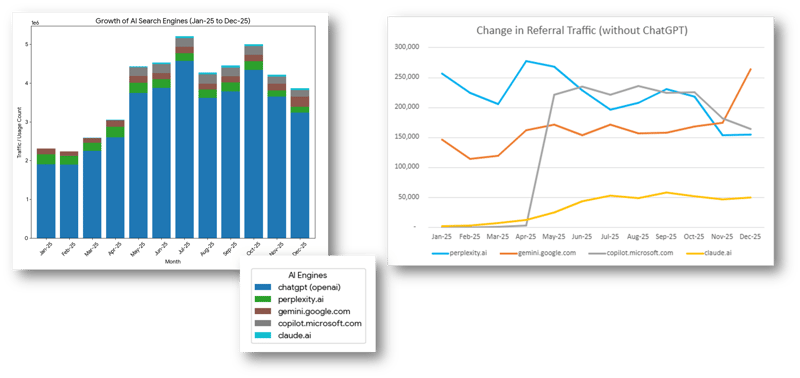
Then we saw late summer, there was a bit of a leveling off when Google really announced and went all-in on AI Mode. We saw a lot more traffic go back to Google and less from these AI search engines. It’s been volatile ever since.
Outside of ChatGPT, there's this really interesting mix of other engines driving referral traffic, albeit very small amounts of it. We see players rise and fall, like Copilot jumping out of nowhere. However, ChatGPT still dominates outside of Google, where nearly 4% of all searches happen.
Here is the thing: a couple of years ago, Bing was 10% of all search, but it didn’t get the level of respect or attention from the SEO industry. Now, because of how fast it’s happening, ChatGPT is on the very forefront of executive minds. Interestingly, ChatGPT ranks number 45 among global websites, and Pinterest still has 10 times more monthly users—but at the end of the day, Google still dominates with 90% of searches.
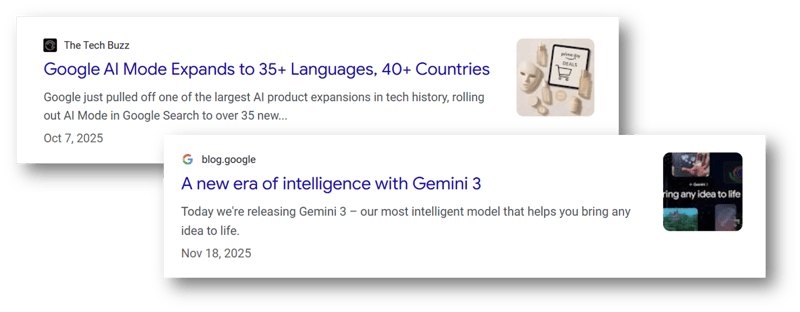
What I’ve seen so many companies focus on is AI Overviews (AIOs). With the huge increase in searches triggering these, there is a great amount of opportunity to test and learn how the LLM is presenting your brand. If roughly 30% of searches trigger an AIO, it still means 70% or greater are the same SERP features you’ve been battling for years—local listings, Google Flights, or product features.
We aren't here to tell you to rebuild your entire program. I want you to think about how you can reinvest your resources to adjust for the new buyer's journey, which includes SEO and AEO as one integrated motion.
In this webinar, our speakers are going to focus on these five pillars:
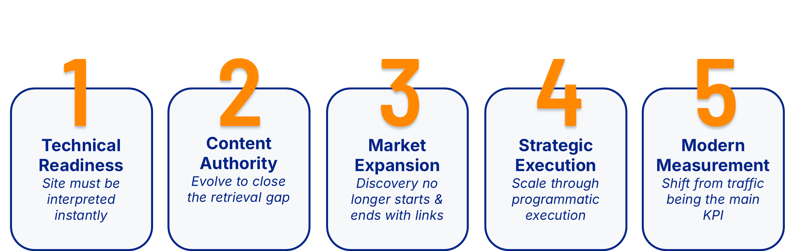
Let’s forget about only caring about traffic and move to a modern measurement of performance.
Connect with Chris on LinkedIn
Pillar 1: Technical Readiness
Mihir: Let’s talk about technical readiness. For a long time, probability was the finish line. If Google could fetch the page, index it, and rank it, we were fine. But AI-driven discovery has changed the rules.
The modern systems don’t browse the pages that we humans do. They retrieve structured facts: products, attributes, availability, and key claims. If the content is not technically accessible, it won't be interpretable. And that means it is effectively invisible.
Interpretability doesn’t happen by accident.
- Reliable Rendering: Today, many AI search bots struggle to render content on JavaScript-heavy websites. If the content is not visible at the retrieval time, it’ll be skipped.
- Structure: Schema markup isn’t just about SEO enhancement anymore; it’s how AI systems understand meaning. It tells the system what is a product, a feature, or a claim.
- Verification: Product feeds are the easiest way to provide that real-time confirmation AI search engines rely on while making that recommendation.
Rendering, structure, and feeds work together. Missing any would break interpretability. To solve this, we built Bot Optimizer. It sits between the AI search bots and your website. Anytime a bot tries to access the site, it serves a fast, fully rendered version.
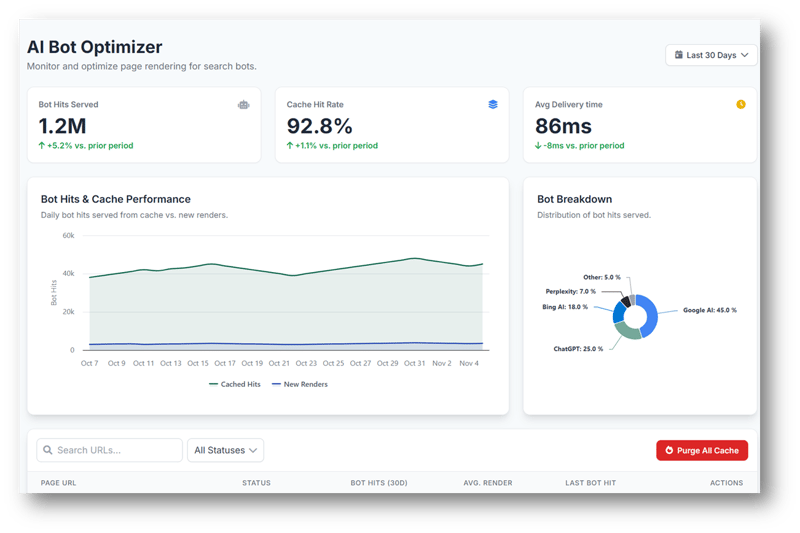
AI systems don't try harder to understand us better. They choose the sources that are easiest to interpret and verify. Without both schema and pre-rendering, even the strongest brands would get bypassed because the systems couldn't confidently process them. Technical readiness is about eligibility—eligibility to be cited, recommended, and to influence the decisions upstream.
Once the system can interpret us correctly, the next question is: are we authoritative enough to be referenced?
Connect with Mihir on LinkedIn
Pillar 2: Content Authority
Tania: This brings us to the reality we face right now: you can have the best product in the world, but if AI can't retrieve it, you're effectively invisible.
I’ve spent my career in content marketing, first in e-commerce and now at seoClarity focused on B2B. If there’s one thing I’ve learned from the shift to AI search, it's that the bar for specificity has changed forever. Before we focused on covering the question; now we need to answer the full context.
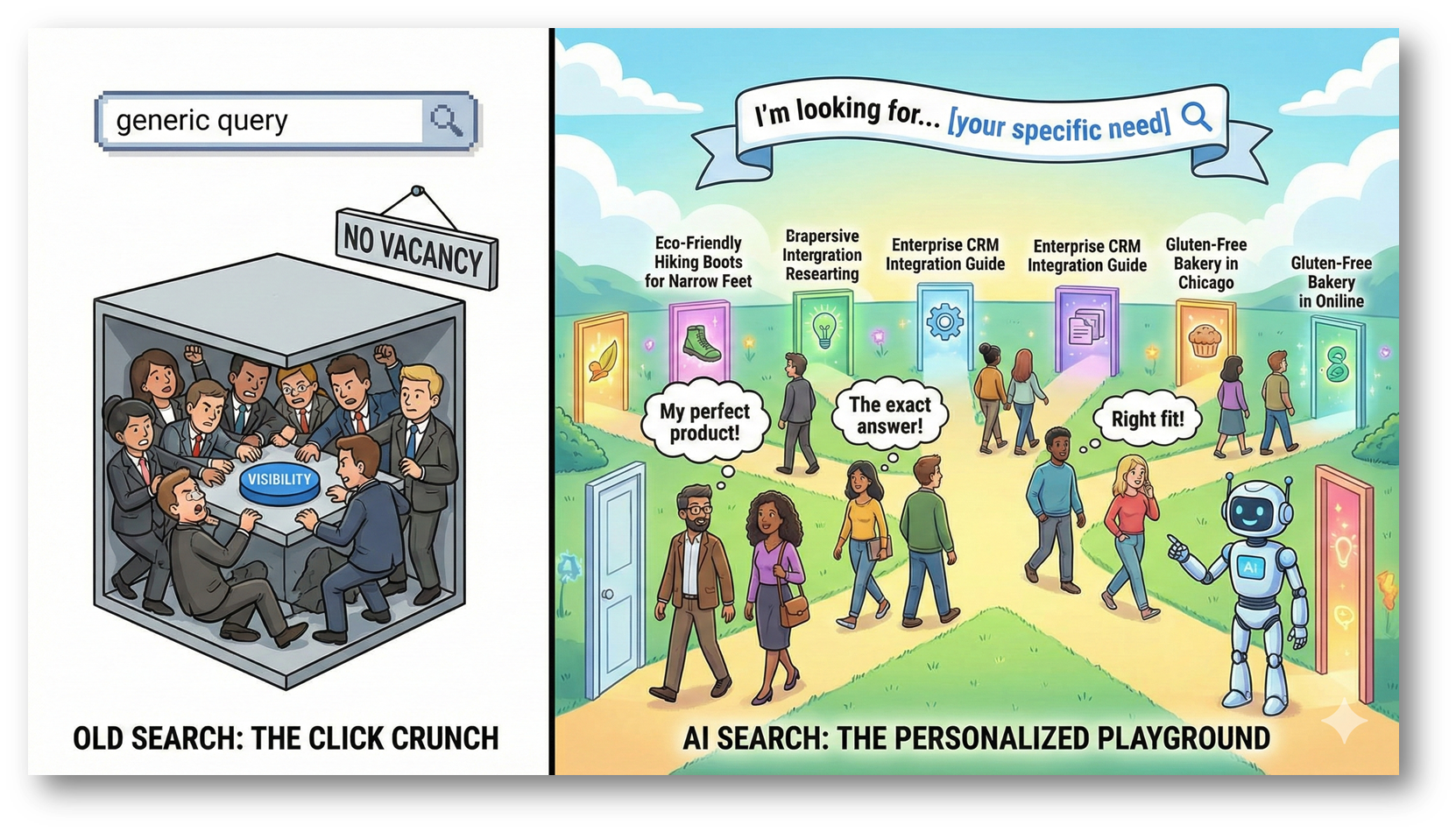
The "Inseam" Example: Before we used to optimize for head terms—my favorite one is "women’s work pants"—and hoped our topic authority would drive the user to land on our site and filter for what they needed. But now, users search with layered intent. I have really tall people in my family, so I’m constantly looking for pants with a 34-inch inseam. You wouldn’t believe how many product pages actually don’t list the inseam, even if the product is a "tall" version!
This data needs to be at a level of high density so AI engines can actually retrieve the products. We need to move to an authority-first economy and away from a traffic-first economy. The complexity of AI search acts as a filter that only rewards the true experts or the content that actually has the detail the user is looking for.
If you have the misconception that LLMs answer the questions so you shouldn't spend on content, I believe the opposite: LLMs require more content and more data, just less fluff. We have to change the mentality from "more content = more traffic" to "more content = more visibility = more revenue."
How to Execute This:
- Structural Tactics: Use "answer-first" or modular blocks of content so AI engines can retrieve and synthesize it back.
- Comprehension: Use Topic Explorer to see "query fanouts." For the topic of "enterprise SEO platform," see all the specific attributes or questions a buyer might actually ask.
- Trust Tactics: B2B companies have used quotes and social proof for years. But now, this isn't just on your website. You need to enable the internet to see that you’re authoritative outside of your domain through online reviews and subject matter experts.
We’ve been testing this at seoClarity, breaking content into batches to see how these tactics drive visibility, mentions, and citations.
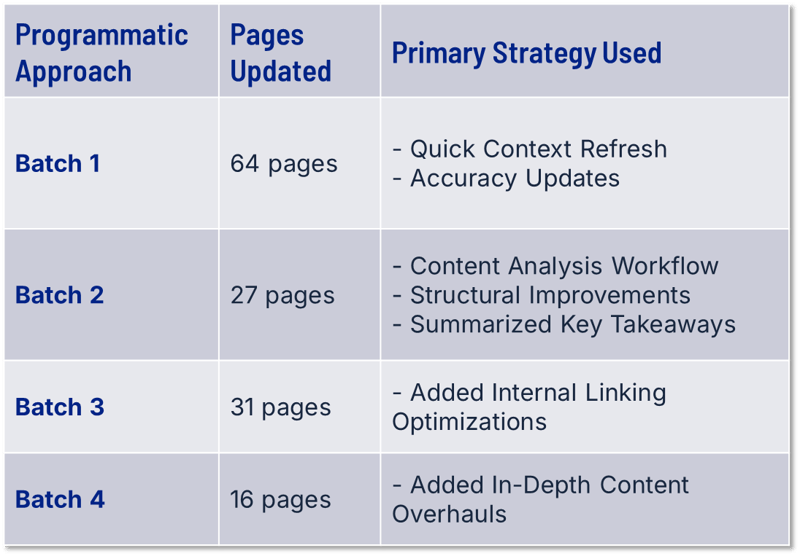
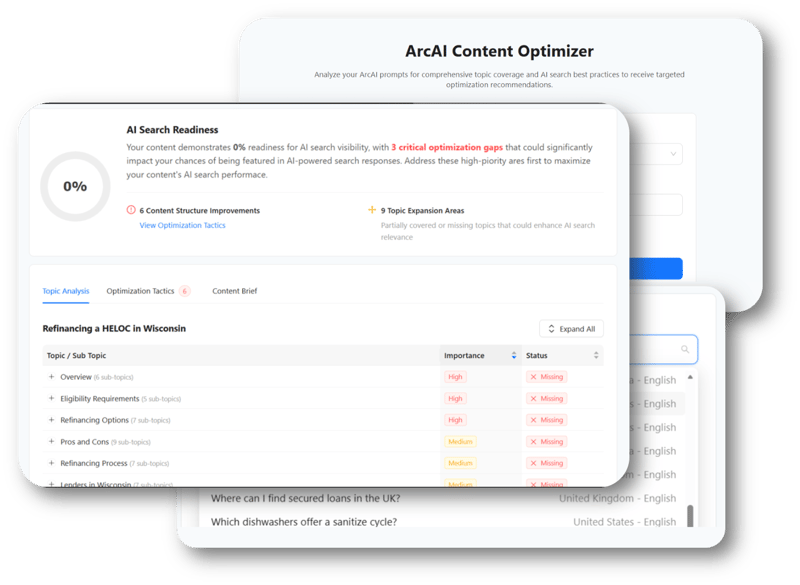
We use our AI Content Optimizer technology to help our writers build connections. We have to stop writing for clicks and start engineering content for retrieval.
Connect with Tania on LinkedIn
Pillar 3: Market Expansion
Mark: In the good old days, it was enough to rank on Google. But we’re seeing a profound shift in how people begin search journeys.
Why are people turning to AI search? If you have specific needs, Google could only get you so far—you had to do multiple searches and bring disparate information together. In AI search engines, people can ask questions with any level of complexity and get a summarized answer with just one click.
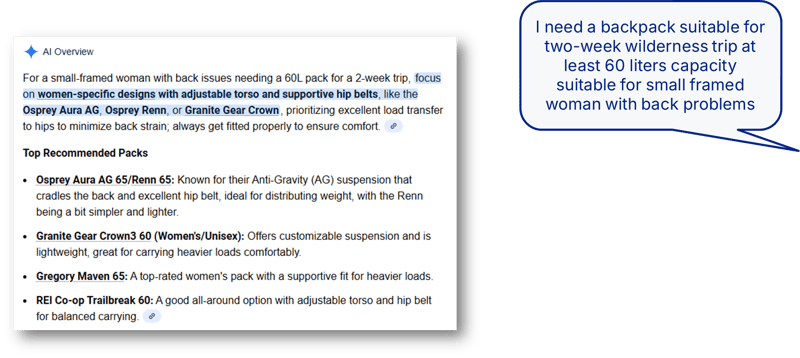
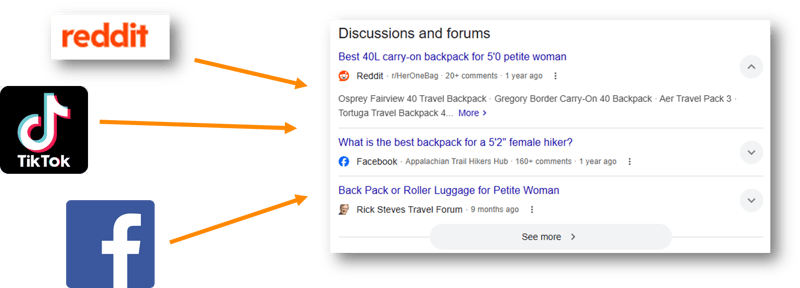
But an even bigger trend is people preferring to start research where they can get recommendations from real people, like online forums and social media. If you aren’t visible in answers on those sites, you’ve already lost the customer. Building authority has to go beyond your own content and into the arenas where people begin their journeys.

Even traditional Google knows users value these sources; we see it in the growth of "Discussions and Forums" and how prevalent Reddit has become. This affects AI search too, as it makes use of diverse sources to put together answers.
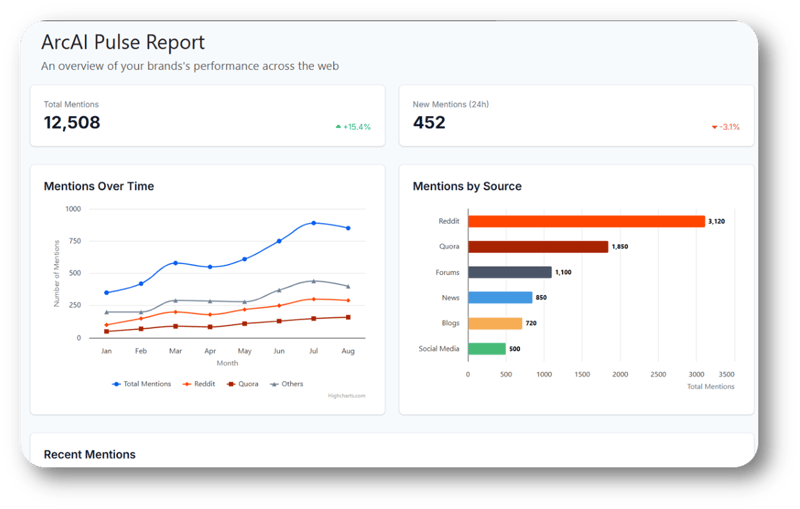
That’s why at seoClarity, we’ve expanded to include Social SEO. Our TikTok research feature keeps you up on latest trends, which is useful for marketing decisions even outside of TikTok. And our AI Search platform, includes Clarity ArcAI Pulse, which reveals where your brand or competitors are being talked about anywhere on the web—forums, news sites, or blogs. Pulse makes sure you know where to involve yourself in the conversation.
You can have the best strategy in the world, but if you aren't able to execute, nothing happens.
Pillar 4: Strategic Execution
Suraj: Thanks Mark. We are at a transition period where traditional search continues to drive revenue while AI search grows every day. Manual execution just does not cut it anymore; marketers require 2026 execution systems.
Current Challenges:
- Data Volume: The sheer volume of micro-intents makes manual management impossible. Marketers must use programmatic SEO to optimize for millions of search variations.
- Algorithm Complexity: Consistency is key. Systems and automation, rather than individual efforts, are essential to maintain uniformity in content optimization.
- AI Advancements: Marketers must focus on structured data and optimizing for voice/visual searches to ensure content aligns with AI-driven intents.
Given these challenges, a split-testing solution becomes essential. It allows you to rapidly test hypotheses and iterate without waiting for dev resources or data scientists. This agility enables you to quickly adapt to changes in the search landscape.
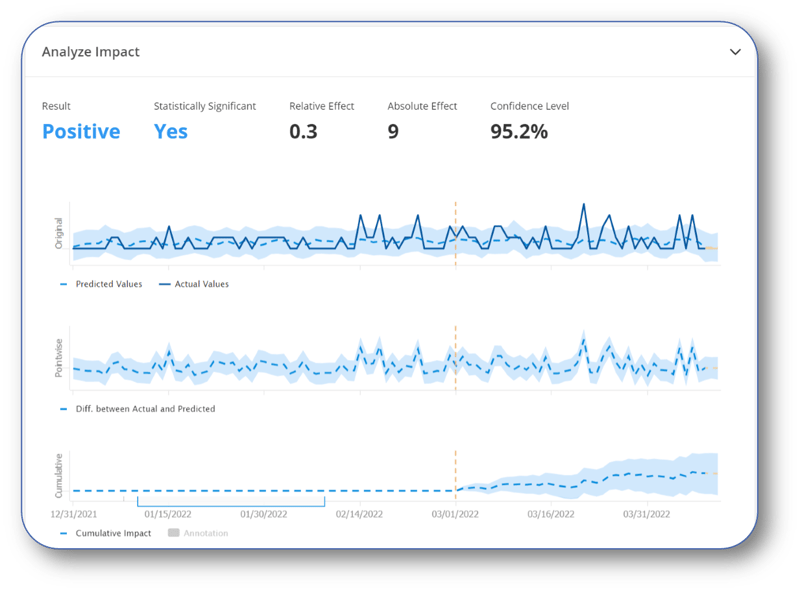
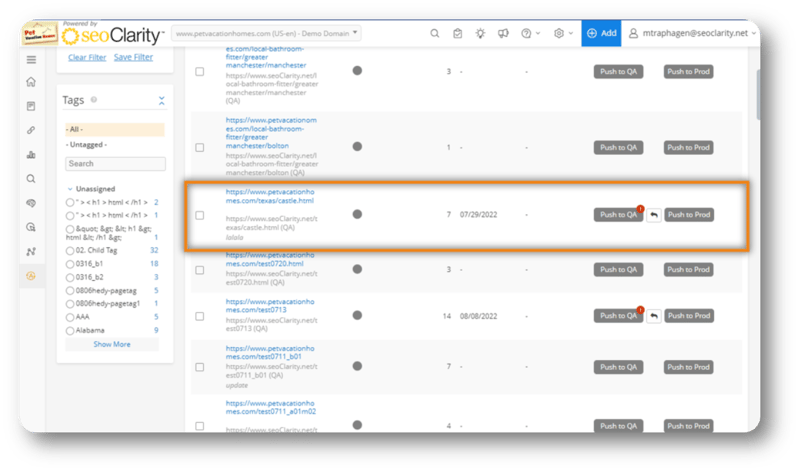
Utilizing a platform that enables execution of changes without requiring dev resources is transformative. An execution platform ensures optimizations are executed swiftly and consistently. It ensures SEO efforts are directly aligned with business objectives, providing measurable impact.
Connect with Suraj on LinkedIn
Pillar 5: Modern Measurement
Chris: We’ve talked about a lot today—from technical readiness to content and execution. Again, this is not a time for a new strategy, it's a time to evolve and think about outcomes differently.
Before we were measuring visits; it was all about traffic. But the strategic shift is about proof. * Before: SEO was a traffic engine—rank higher, get clicks, report lift.
- Now: SEO and AEO together work like a decision channel. Buyers evaluate brands inside search results and AI answers. So we measure what actually moves the business—focused topics and trust within the answer. Success requires combined measurement, not replacement metrics. Traffic and revenue cannot be ignored, but neither can visibility be ignored in this environment.
What has stayed the same? Content still matters, authority still wins, and discovery still drives growth.
Conclusion:
Your Takeaways to Bring Back to Your Business:
- One Motion: You cannot treat rankings and AI answers as separate strategies.
- Technical Readiness is an AI Requirement: If systems can't crawl, interpret, or trust your content, you aren't eligible for visibility.
- Retrieve and Trust: The job is not only to publish more, it is to create content systems can confidently pull into answers.
- Authority Beyond Your Site: Mentions, citations, and internal link structures shape how AI and buyers perceive you.
- ROI Beyond Traffic: Visibility now includes SERPs and AI answers. Measure outcomes like quality visibility, trust, and commercial influence—not just sessions and clicks.

The search space is actually deeper and more vast than it’s ever been. Refocusing on an "authority-first" strategy turns these market disruptions into your most sustainable engine for growth.
Postscript: Enjoyed this session? Subscribe to our blog for more enterprise SEO and AEO insights. If you're ready to see how Clarity ArcAI works in real-time, schedule a demo today.



Comments
Currently, there are no comments. Be the first to post one!