seoClarity Research Study
ChatGPT’s Linked Brand Mentions Surge AI Referral Traffic to Websites
By Mitul Gandhi, Chief Architect & Co-Founder of seoClarity
Published: August, 2026



By Mitul Gandhi, Chief Architect & Co-Founder of seoClarity
Published: August, 2026
While growth in referral traffic from top AI search engines remained steady through 2025 and early 2026 (averaging between 2.4M and 3.6M monthly visits), total AI referral traffic more than doubled in June 2026, with significant growth continuing in the following months.
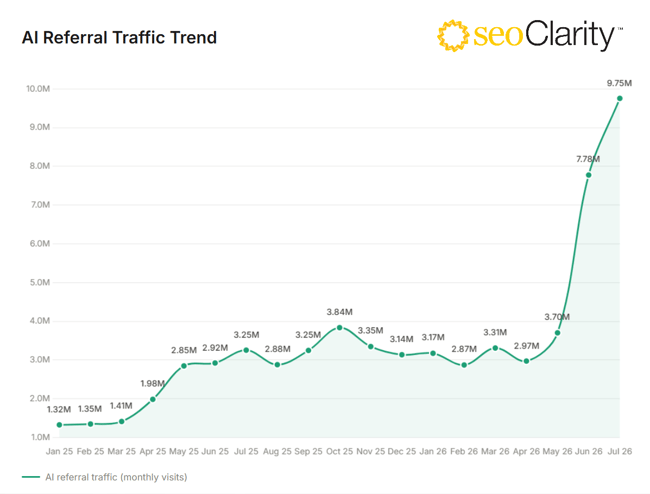
This sudden acceleration demonstrates that user engagement within AI search interfaces can scale rapidly, making active optimization across AI platforms an increasingly crucial component of organic growth strategies.
Marketers must realize that AI engines are no longer just answering engines; they are actively acting as referral hubs. To capitalize on this shift, search optimization specialists must expand beyond traditional rank tracking and establish dedicated tracking for AI referral paths through platforms like Clarity ArcAI to capture high-intent users before competitors do.
ChatGPT referral traffic increased 130% month over month in June, substantially outpacing every other major AI platform we tracked. That growth continued into July and August, further widening ChatGPT’s lead as a source of AI-driven referral traffic.
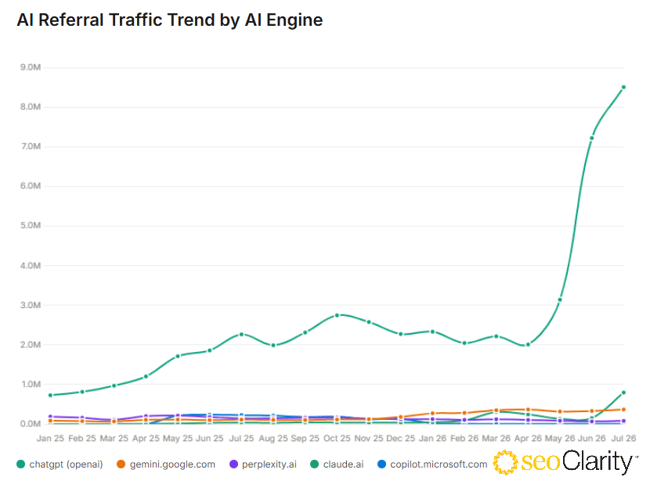
By comparison, June referral traffic from other major AI engines changed relatively little:
However, Claude saw its own significant increase in July 2026, with referral traffic increasing 424% month over month. It then dropped back down with an 83% dip the following month.
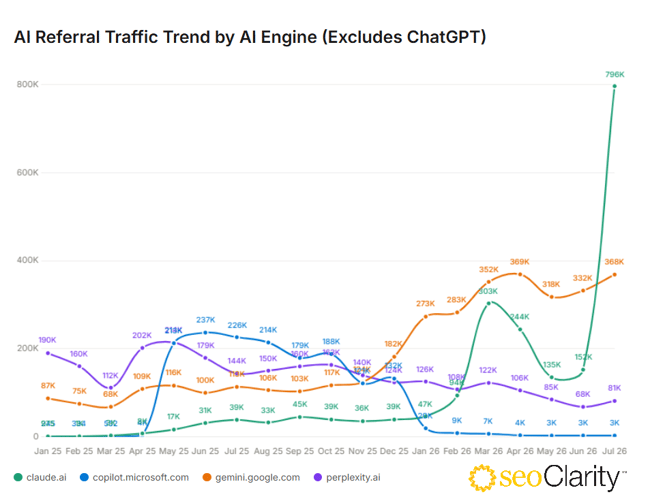
The sharp month-over-month increases in referral traffic from ChatGPT as well as Claude show how quickly individual AI engines can emerge as meaningful traffic sources. Rather than broad market adoption alone, these shifts suggest that engine-specific product changes and user experiences can have an outsized impact on referral traffic.
For brands allocating resources across emerging search channels, ChatGPT remains a key priority given its current scale and growth. However, AEO strategies should remain flexible. Claude’s recent surge and subsequent decline demonstrate how quickly referral patterns can shift as AI engines evolve, making it important to monitor performance across ChatGPT, Gemini, Claude, Perplexity, and other platforms.
Recommended Reading: Tracking the Volatility of ChatGPT’s Citations: A Global Trend Analysis
Google Analytics 4 introduced a dedicated "AI Assistant" channel grouping in May and June 2026, reclassifying AI referral traffic that previously fell under general referral buckets.
We evaluated whether this reporting change artificially created the traffic spike. However, because GA4’s channel update applied universally across all platforms, any reporting-driven lift would have appeared across Gemini, Perplexity, Copilot, and Claude as well.
Because non-OpenAI engines saw minor percentage movements in June, we believe reporting reclassification can be ruled out as the primary driver.
Analytics audits are essential, but technical reporting changes should not distract teams from real product shifts. Digital leaders should ensure web analytics tools correctly categorize "AI Assistant" traffic, ensuring that real performance lifts from AI optimizations are accurately attributed in executive reporting rather than buried in standard referral buckets.
Recommended Reading: How to Track AI Search Traffic to Your Site in GA4
On May 7, 2026, OpenAI introduced inline, clickable brand links embedded directly within generated response text, directing users straight to brand homepages. We tested whether homepage-specific traffic spiked exclusively for ChatGPT across a sample of top destination URLs.
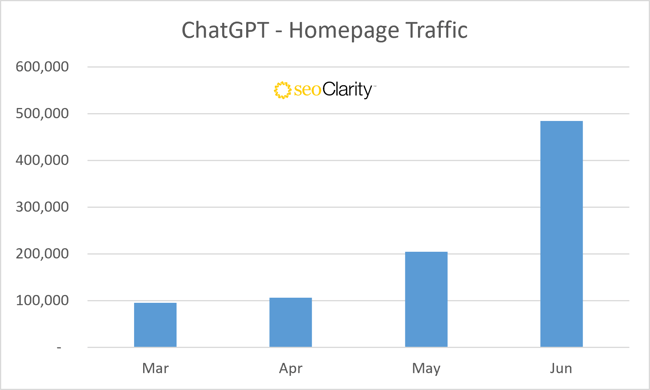
It is likely that May’s data reflected a partial rollout (as the feature gained full visibility mid-month), making May a transition baseline. June represented the first full 30-day period under the expanded linked brand mention behavior, which likely compounded with ChatGPT's broader active user base growth to drive the dramatic increase.
Linked brand mentions represent a fundamental change in how users interact with AI responses, shifting from zero-click answers to direct brand discovery.
Because these linked brand mentions land directly on homepages, digital teams must optimize homepages specifically for incoming AI user journeys, ensuring clear navigation pathways, strong brand messaging, and immediate conversion prompts tailored to intent-driven traffic.
.png?width=192&height=192&name=Mitul%20Gandhi%20-%20Author%20Snippet%20(1).png) About the Author: Mitul Gandhi
About the Author: Mitul GandhiAs a longtime data-driven serial entrepreneur, information architect and SEO veteran, Mitul has developed a blend of vast technical expertise and intense marketing insight. His variety of experience, gained in positions in in-house SEO, search marketing, and software development, affords him the ability to efficiently assess how to use software tools to meet challenges and drive ROI. As the Co-Founder and Chief Architect of seoClarity, Mitul currently oversees day-to-day operations, and provides strategic direction to all departments. His well of knowledge includes 10+ years of consulting experience with Fortune 500 and top Internet retailers concerning online search marketing. He has several patents pending for analyzing cause and effect in SEO. Mitul holds an MBA in direct marketing from Rochester Institute of Technology. Additionally, he has spoken at conferences in the United States and the U.K., including SES, SMX and Pubcon. He has also been quoted in MSN Money, USA Today, Time Online, Search Engine Watch, Search Engine Land and Web Pro News. Connect with him on Twitter or LinkedIn.